
How to Paint a Room
A step-by-step guide to painting a room, from preparing the walls to the final coat.
6 min read · 6 steps
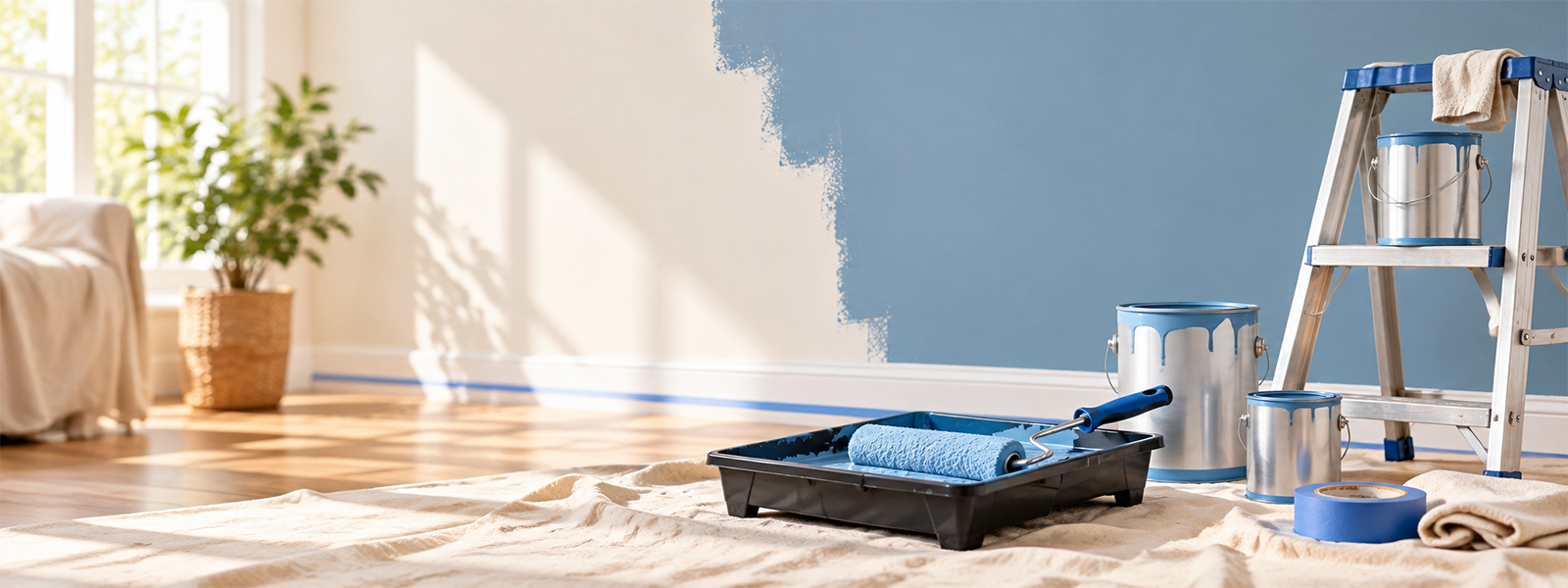
Clear and protect the room
Move furniture to the centre of the room or out entirely. Cover the floor and anything left behind with dust sheets or old newspaper, and take off switch plates and socket covers where you can.
Tip: Keep a window open while you work so the room stays ventilated.
Clean and repair the walls
Wipe the walls to remove dust and grease. Fill cracks and small holes with wall putty, let it dry fully, then sand smooth and wipe off the dust.
Tip: Run your hand over the wall after sanding. If you can feel a bump, it will show under the paint.
Mask the edges and apply primer
Tape off skirting boards, window frames and the ceiling line. Roll on a coat of wall sealer or primer and let it dry completely before painting. This gives an even, long-lasting finish.
Tip: Primer matters most on new plaster and on walls with patches of putty.
Cut in the edges
Using a brush, paint a neat band around the edges of the room (corners, ceiling line and skirting) before you bring out the roller.
Roll the main walls
Work in a W or M pattern with a loaded roller, then fill in without lifting the roller. Apply two coats, leaving the recoat time shown on the product page between them.
Tip: Keep a wet edge: roll back into the section you just painted before it dries, so no lines show.
Final check and touch-up
Once the walls are fully dry, remove the masking tape and check the room in daylight for any thin patches. Touch up with a brush if needed, then put the room back together.
Tip: Pull the tape off slowly, back on itself, for a clean line.
Not sure how much paint you need?
Use the calculator below to work out the litres and the best pack combination to buy.
Paint calculator
Work Out Your Litres & Price
Tell us what you're painting and pick a product - we'll work out the litres, the best packs to buy, and the price.
Fill in the steps above and press Calculate to see how much paint you'll need.